
boxes for candles
Showing the single result
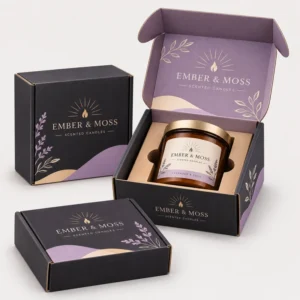
boxes for candles are cartons chosen to suit the candle inside, whether that is a single jar for a shop shelf, a tin for a travel range, a tall pillar for a gift, or a set for a seasonal collection. The right box protects wax, glass and labels, keeps the candle still during delivery, and shows scent and brand clearly to the buyer. Choosing by candle type, rather than by a standard carton size, gives a tidier fit, a better opening experience and fewer damaged orders.
How boxes for candles differ by candle type
Every candle format brings a different packing problem. A jar candle is heavy and breakable, a tin candle is light but easy to dent, a pillar candle is tall and can bend a weak carton, and a tealight is so small that it can rattle inside a box meant for a larger product. A box that works for one format may therefore fail for another, even if the dimensions look close. The vessel material, the lid style and the way the candle will be sold all change the answer.
Weight is a useful starting point. Glass jars concentrate weight in a small footprint, so the base of the box and the insert must carry that load without sagging. Tins spread weight more evenly, but their lids can lift if a flap presses on them. Pillars need vertical support, because a tall candle can lean and press against one wall during transit. Small candles need separation, because a handful of loose votives will chip each other if they are packed without dividers.
Jar candles and glass vessels
Jar candles suit a carton that is only slightly larger than the jar, with an insert that supports the base and the curve of the glass. The insert should leave the label visible when the box is opened, and it should not grip the jar so tightly that lifting the candle pulls the label. For larger jars, corrugated board gives extra crush resistance, while a folding carton with a good insert may be enough for retail display where the box will not travel far. Always measure with the lid fitted, because a wooden lid, a metal lid and a flat lid can change the total height by a noticeable amount.
Protecting labels and lids in transit
Labels scuff when a jar rotates inside its box, so the insert must stop rotation as well as sideways movement. Lids loosen when a closure flap presses down on them, so check the internal height with the box fully closed. A top pad can help, but it should sit evenly and should not push the lid sideways. If a lid is decorative, with a knob or a raised detail, allow extra clearance above it rather than forcing the box shut.
Tin, pillar, tealight and taper candles
Tin candles often suit a slim carton, sometimes with a simple sleeve for a single candle or a divider for a set of three or four. Pillar candles need a taller carton with a firm base and a snug fit around the middle, because a pillar that can lean will mark its own wax. Tealights and votives suit a divided tray, a multipack carton or a small carton with compartments, depending on whether they are sold singly or as a set. Taper candles need length above all, with end protection so the tips do not bend or snap, and a carton that stays straight when carried.
Presentation changes with format as well. A jar candle can carry scent artwork on a wide front panel, while a tin candle may need a smaller, bolder design that reads well on a narrow surface. A pillar box can use height for a striking vertical design, and a taper box can use its length for an elegant, simple layout. In each case, the design should leave room for scent name, burn guidance and safety wording in a legible size.
Choosing a carton style for each format
A tuck end carton opens and closes easily and suits retail handling. A mailer style carton with a self locking flap suits postal orders, because it stays shut without extra tape on the opening edge. A lid and base box suits premium gift sets, because it lifts away cleanly and can be kept by the customer. A window carton suits a shop shelf, because the buyer can see wax colour and texture, but it is less useful for a postal order where the window adds a weak point.
Materials, print and finishes for boxes for candles
Kraft board gives a natural, warm look that suits handmade, botanical and rustic ranges. White card gives a bright surface for colour, photography and detailed scent artwork. Corrugated board gives strength for heavier jars and for orders that will travel through sorting and delivery networks. Rigid board gives a firm, premium feel for gift sets and for candles that will be kept as a keepsake after the candle is finished.
Print and finish should match the mood of the candle. Full colour print reproduces scent artwork accurately, matte lamination gives a soft and calm feel, and gloss lamination adds shine for festive or bold designs. Foil can lift a logo or a scent name, embossing can add texture to a pattern, and spot UV can highlight one element without making the whole box shiny. A printed interior adds a surprise on opening, and it is a good place for a short thank you message or care note.
Sizing boxes for candles without waste
A box that is too large wastes board, needs more filler and can make a candle look small inside its packaging. A box that is too small risks damage to labels, lids and wax. The practical test is simple: pack the real candle, close the box, and check that the candle does not move, the lid does not lift and the label does not catch. Repeat the test with the candle in different positions, because a box that works in one orientation may fail when the parcel is turned during handling.
Measuring for a set or a collection
For a set, measure each candle separately, then plan the layout inside the box before choosing dimensions. A row of jars needs dividers and a small gap between vessels, a stack of tins needs a tray that stops the upper layer sliding, and a mixed set needs compartments of different sizes. Sketch the layout, including any extra items such as matches or a care card, so the finished box has a place for everything and nothing is squeezed in as an afterthought.
Retail display, storage and online orders
Retail boxes need to stand upright, stack neatly and survive repeated handling on a shelf. Storage boxes need to stack without crushing the lowest layer, so board strength and a flat base matter more than a decorative finish. Online order boxes need a secure closure and enough strength for courier handling, and they often work best as a corrugated mailer, either on their own or as an outer around a retail carton. Planning for all three uses at the start avoids redesigning the box when a range moves from a market stall to a shop and then to online sales.
For standard boxes, allow 10 to 14 working days after final artwork approval. Corrugated boxes usually take 12 to 15 working days, and rigid or specialist boxes usually take 13 to 16 working days. These are production lead times, not a guaranteed delivery date, so allow extra time for proofing, artwork changes and busy seasonal periods. A clear record of size, board, insert and finish for each candle makes a reorder straightforward.
Ordering boxes for candles
Share the candle type, vessel size, lid style, quantity and selling route, then request a quote for a box built around that brief. You can explore related packaging through boxes for candle packaging and boxes for packaging candles, browse the full range in the shop page, and learn more about the company on the about us page. When you are ready, use the get a quote page to send your candle details.
Frequently asked questions about boxes for candles
What is the best box for a jar candle?
A close fitting carton with a shaped insert usually works best. It supports the base and shoulders of the glass, stops rotation that scuffs labels, and keeps the jar still during delivery.
Do tin candles need a different box from jar candles?
Yes, in most cases. Tin candles are lighter and often suit a slimmer carton, while jar candles need stronger board and a more supportive insert because of the weight and fragility of glass.
Can one box suit both retail and postal sales?
Sometimes, if the box is strong enough for postal handling and attractive enough for a shelf. Many brands use a retail carton inside a corrugated mailer for postal orders, so the inner box stays pristine.
How do I pack a candle set without damage?
Use dividers or a tray insert so each candle is separate, keep lids firmly seated, and check that nothing moves when the closed box is gently shaken. Loose filler alone rarely stops candles knocking together.
How long do boxes for candles take after artwork approval?
Standard boxes usually take 10 to 14 working days after final artwork approval, corrugated boxes 12 to 15 working days, and rigid or specialist boxes 13 to 16 working days. Allow extra time for proofing and seasonal demand.